

You are using an out of date browser. It may not display this or other websites correctly.
You should upgrade or use an alternative browser.
You should upgrade or use an alternative browser.
DYI squaring rounded fretboard end
- Thread starter JamesSan
- Start date

Strat Avenger
Hero Member
- Messages
- 3,041
Personally, I would not try it.
Next time, call Warmoth and ask them to square off the fretboard end. They offer it as an off-menu option.
Next time, call Warmoth and ask them to square off the fretboard end. They offer it as an off-menu option.

casper100
Junior Member
- Messages
- 154
I have done some very small rounding of Warmoth fretboards with a sharp razor and then light sanding before doing the fretwork that I always do anyway. Just scrape the razor from one fret to the next at about 60 degrees several times then sand up to 800.
Edit. I read your post wrong. I’ve never seen anyone try to square off rounded edges.
Edit. I read your post wrong. I’ve never seen anyone try to square off rounded edges.
Last edited:
doctorvague
Newbie
- Messages
- 3
Funny - I'm the opposite. I find squared off fingerboards unsightly and plan to round off the corners of my next purchase. Just one guy's opinion worth exactly $0.

stratamania
Mythical Status
- Messages
- 12,434
I have done some very small rounding of Warmoth fretboards with a sharp razor and then light sanding before doing the fretwork that I always do anyway. Just scrape the razor from one fret to the next at about 60 degrees several times then sand up to 800.
Edit. I read your post wrong. I’ve never seen anyone try to square off rounded edges.
Funny - I'm the opposite. I find squared off fingerboards unsightly and plan to round off the corners of my next purchase. Just one guy's opinion worth exactly $0.
The thread is not discussing "rolled" fretboard edges, it is talking about the end of the fretboard at the body end which is curved and whether to square it off.
From this shape.
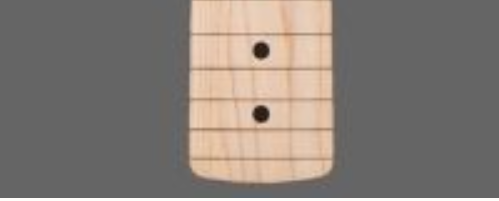
to this shape.

casper100
Junior Member
- Messages
- 154
Ahhhhh…… Thanks.The thread is not discussing "rolled" fretboard edges, it is talking about the end of the fretboard at the body end which is curved and whether to square it off.
From this shape.
View attachment 67950
to this shape.
View attachment 67951

TonyFlyingSquirrel
Master Member
- Messages
- 4,825
Typically, the Gibson scale 24 3/4” scale conversion necks have the squared heel and the standard Fender 25.5” scale necks have the rounded heel.

JohnnyHardtail
Senior Member
- Messages
- 759
If you go ahead with this modification, please ensure you have not been drinking.
Last edited:

Spud
Master Member
- Messages
- 3,342
What!!??? Booze and power tools go together like peas and carrots!!!!If you go ahead with this modification, please ensure you have not been drinking.

Heavy Rock
Junior Member
- Messages
- 172
I've done it twice with no issues. It's the simplest mod on a fretboard literally.
The second time for me, it was a bound fretboard, I need to glue a piece of binding now and it'll be perfect.
Just don't rush.
The second time for me, it was a bound fretboard, I need to glue a piece of binding now and it'll be perfect.
Just don't rush.
Heavy Rock
Junior Member
- Messages
- 172
The process I'd follow:
Put a towel on your bench, and put the neck on the towel upside down (frets facing down). Leave the end of the neck out of the towel.
Take a wooden cube or something similar with flat surfaces and right angles. Stick a sandpaper on one of its surfaces. Put the cube's surface with the sandpaper against the fretboard end but while it's touching the table. This will ensure the right angle of the fretboard looking at it from the side.
The wood is sanded slowly so you can make corrections as you go.
If you want to be extra precise, you can take another neck with a square end and put it on top of the first one, align the two neck heels and clamp them with a clamp from the side, so you can use the top neck as a guide. Or just another cube shaped block of wood of similar dimensions as the heel.
For this you need a bigger block of wood and leave the surface of it which touches the top neck without sandpaper, so when you reach it, you won't damage it and use it as a straight edge.
Again go slowly.
Put a towel on your bench, and put the neck on the towel upside down (frets facing down). Leave the end of the neck out of the towel.
Take a wooden cube or something similar with flat surfaces and right angles. Stick a sandpaper on one of its surfaces. Put the cube's surface with the sandpaper against the fretboard end but while it's touching the table. This will ensure the right angle of the fretboard looking at it from the side.
The wood is sanded slowly so you can make corrections as you go.
If you want to be extra precise, you can take another neck with a square end and put it on top of the first one, align the two neck heels and clamp them with a clamp from the side, so you can use the top neck as a guide. Or just another cube shaped block of wood of similar dimensions as the heel.
For this you need a bigger block of wood and leave the surface of it which touches the top neck without sandpaper, so when you reach it, you won't damage it and use it as a straight edge.
Again go slowly.
Last edited:
I woke up one morning after a night of partying with my band and I realized I had decoupaged one of my guitars with porn pictures cut out of a vintage magazine. I clear coated it and it became a novelty lolWhat!!??? Booze and power tools go together like peas and carrots!!!!
Spud
Master Member
- Messages
- 3,342
Don't forget the scotch!The process I'd follow:
Put a towel on your bench, and put the neck on the towel upside down (frets facing down). Leave the end of the neck out of the towel.
Take a wooden cube or something similar with flat surfaces and right angles. Stick a sandpaper on one of its surfaces. Put the cube's surface with the sandpaper against the fretboard end but while it's touching the table. This will ensure the right angle of the fretboard looking at it from the side.
The wood is sanded slowly so you can make corrections as you go.
If you want to be extra precise, you can take another neck with a square end and put it on top of the first one, align the two neck heels and clamp them with a clamp from the side, so you can use the top neck as a guide. Or just another cube shaped block of wood of similar dimensions as the heel.
For this you need a bigger block of wood and leave the surface of it which touches the top neck without sandpaper, so when you reach it, you won't damage it and use it as a straight edge.
Again go slowly.
Heavy Rock
Junior Member
- Messages
- 172
Yes! Essential for inspiration in cases like this.Don't forget the scotch!
 or if you make a mistake you won't feel it as much
Similar threads
- Replies
- 28
- Views
- 2K


