
Strat Avenger
Hero Member
- Messages
- 3,040
'Need to play more and toughen up your finger tips.


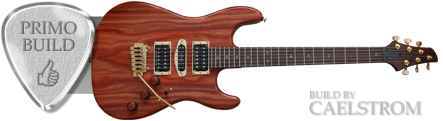


Curious, is it more chords or single note playing that causes pain on the electric?
TBurst, thanks for the follow up.Not necessarily the same. I wanted to test lower tension with thicker strings.
Curious: part 1 of multi part Qs: do you play the acoustic standing or sitting for the most part?
Hey, thanks for the advice. I do play 4-5 hours a day maybe not a lot to many people. 4-5 hours on a acoustic guitar with heavier gauge strings, and since I play a lot of blues, I do bends on the acoustic as well.'Need to play more and toughen up your finger tips.
Thanks Hodgo for chiming in.Is your technique different on the Strat somehow? Playing new styles of music, more bends / vibrato, playing for longer periods of time, etc?
I can’t think of any reason an electric guitar would injure you over an acoustic, as the human hand is wonderfully adaptable. Plenty of folks who can switch between guitar, banjo, mandolin - wildly different shapes and constructions. Hard to believe two guitars of radically similar specification could be the culprit.
I think you should try Stringjoy. For wound smoothness I feel it's Stringjoy > Daddario > Ernie Ball. Though if it's the plains giving you a problem I dunno.I did initially ask my tech to setup the guitar, though I think the nut slots could be lower.
For strings I’m using Ernie Ball super slinky. I might get a set of Elixir and see how it feels!
Thank you for sharing.^Anything's possible. Is the low or high E too close to the edge? Are you not able to get a comfy action with slight neck relief?
I think you should try Stringjoy. For wound smoothness I feel it's Stringjoy > Daddario > Ernie Ball. Though if it's the plains giving you a problem I dunno.
Maybe you're pushing down too hard since the strings are lighter?
Are you using "balanced tension" strings? They're great on paper, but years of muscle memory make me expect a lighter B string than E string and I struggle a bit if they're "balanced." (Stringjoy is all about balanced tension but you can make your own set for an extra buck. D'addario balanced tension also feels weird because they equalize tension all across. Stringjoy has the wounds tighter which feels more natural imo.)

Hey Ned, that is very helpful and encouraging information.Next step in troubleshooting: can you visit a music store and just try out different electrics? This is to see if we can isolate the case in a more broad sense. So far, it seems like we've been focusing on the modularity of your Strat, but before exploring any further modifications to that specific guitar, let's see if it's common to all electrics in general.
Try out Strats, Teles, more Gibsons (LPs and SGs), Jacksons, Ibanez, BC Rich, and whatever else you can get your hands on.
If literally none of those resolves the issue, then we may be looking at playing position (thinner body electric and how it sits on your body vs. thicker acoustic). On the other....uh....hand (sorry), if one of those is noticeably more comfortable to play, then you have a new data point to consider: what's different about that instrument, no matter how seemingly insignificant?

Thanks mate.Hmm more info. For this item it would be best to get some assistance.
Take your acoustic in a sitting playing position. Now take 4 measurements:
Top of left shoulder to the 1st fret.
Now the height distance from the top of shoulder to the E string at first fret.
Repeat with Strat.
Bet there’s a difference. I’ve been thinking this is an ergonomic issue from the beginning.

Hey Hodgo thanks for the follow up, and investing your time in this.I’m overly invested now because this is interesting.
Did you mean to say heavier strings / lower tension? A thicker string will have the opposite effect of more tension to the same pitch.
You mentioned cowboy chords and hammer ons, but your Petrucci guitars are therapeutic, so I think we should focus on those.
I would love to know exactly what specs differ between your Majesty and your Strat along the string path. Break angle at nut, nut spacing, nut width, nut slot height, action, relief, neck thickness, neck shape, amount of fretboard rollover, quality of nut and saddle slotting and lubrication, type of trem, break angle at trem.
I will eat my hat if you dial in everything identical and it’s still a problem. Block the trem off too, cause who knows!
Okay. So biggest differences are rolled edges, nut slots, and trem type.Hey Hodgo thanks for the follow up, and investing your time in this.
Yes a heavier gauge with half step tuned down (Eb). Now I think the string gauge is out of the equation. I think regarding specs the following is what I can tell.
Nut width is the same
JP 1-11/16 Strat1-11/16
Action: almost identical. I tried higher and lower actions on my Strat, ruled out that action being a factor.
Relief: Almost identical
Neck dimensions: JP is thinner than my Strat, both are C shaped, although the difference in thickness between the two neck are really really close I think the JP is 0.78-0.82ish? Strat is 0.80-0.85. The JP is more rolled along the fretboard compare to the neck on the Strat. The break angle on both tremolo are the same I think? They are both decked to the body.
Nut
The nut on the Strat is cut by warmoth, I think the slots are good? I understand warmoth is a guitar part company, therefore I think the nut could use an upgrade or cut by a luthier. Also, the nut slots could definitely be lower on the Strat.
Spacing
The JP is 10.8mm spaced between strings on the bridge whereas the Strat is 10.5mm although I have tried a 10.8mm bridge on the Strat as well (didn’t solve the issue)
The trem
JP has their own branded, it’s semi recessed
Start: 6 screw synchronized (non-recessed)
I wish I have the luthier skills to dial them in on my own, but I don’t. Would cast a lot to ask my luthier to do these though. I don’t know if that worth a try.
It was a joke.Hey, thanks for the advice. I do play 4-5 hours a day maybe not a lot to many people. 4-5 hours on a acoustic guitar with heavier gauge strings, and since I play a lot of blues, I do bends on the acoustic as well.
Maybe it’s me being ignorant, though I think the finger tips are not weak… but again just like us human, can’t hurt to toughen up even more.
Yes, you are right! It’s a partscaster. I will go ask my tech to get the slots lower. TLCAhhh so we're not talking about a "Strat" but a Warmoth partscaster. And the nut slots being too high could def be a problem. I recently removed the tiny shim under my locking nut and was blown away by how much easier it plays and also surprised by no extra buzz.
Side note: does Warmoth cut the slots assuming their biggest frets even if you order smaller ones? That'd make sense in terms of cost/production/efficiency.
Sounds like it just needs some TLC.

Thanks, that is very helpful info.Okay. So biggest differences are rolled edges, nut slots, and trem type.
If it’s an unfinished fretboard, you can roll the fretboard edges with a razor. The nut should be professionally finished if it’s a Warmoth. The break angle at the nut is fairly fixed except for raising the string tree, but maybe?
Decked trem can be ruled out, so I’d say nut is the culprit (and it always is in funny situations)

I don't think so, because you cannot order a nut, when the fret size ("slots only") is not specified.Side note: does Warmoth cut the slots assuming their biggest frets even if you order smaller ones?
Thanks for chiming in!I don't think so, because you cannot order a nut, when the fret size ("slots only") is not specified.
@LeoNicecandyis it a finished (maple) fretboard on your strat?
EDIT: Nevermind, you just wrote that.
Either way, could you post a picture of the guitar in question?


